
Our approach to sustainability is about delivering impact faster with more focused, urgent, and systemic action across our four sustainability priorities: climate, nature, plastics, and livelihoods.
In the U.S., our efforts around climate are focused on reducing emissions from our operations, building sustainability into our product innovation pipeline, and working with suppliers and partners for greater impact.
Our Climate Transition Action Plan
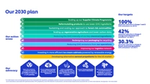
Unilever’s Climate Transition Action Plan (CTAP) (PDF 7.98 MB) is implemented locally in the U.S. market. We are contributing to the global ambition to achieve net zero GHG emissions by 2039. The CTAP has been approved by 97.5% of our voting shareholders. We are using 10 specific action areas to implement this work and focus our efforts where they matter most.
-
Access a description of the image above
The image is an infographic titled “Our 2030 plan”. It features a colorful horizontal list of action areas in the center, each in a different color band. These include:
- Scaling up our Supplier Climate Program
- Reformulating products to use lower-GHG ingredients
- Sustaining and scaling our approach to forest-risk commodities
- Scaling up regenerative agriculture and lower carbon dairy
- Reducing the GHG intensity of key chemical ingredients
- Redesigning packaging for recycling
- Reducing GHG emissions from operations
- Improving logistics network
- Investing in more efficient ice cream cabinets powered by renewable energy
- Developing alternative aerosol propellants for the US market
On the right side, there are targets in bold blue and purple text:
- 100% absolute reduction in Scope 1 and 2 GHG emissions (vs 2015)
- 42% absolute reduction in Scope 3 energy and industrial GHG emissions (vs 2021)
- 30.3% absolute reduction in Scope 3 forest, land, and agriculture GHG emissions (vs 2021)
At the bottom, five hexagonal icons represent advocacy goals, such as raising ambition for national climate strategies, ensuring carbon pricing, scaling renewable energy, supporting forest protection, and encouraging evolution of the GHG Protocol standards.
The overall design uses bright colors (green, blue, purple, orange) on a white background with clear headings and icons.
Reducing Emissions from Logistics
Reducing Emissions from Logistics
We’re demonstrating progress toward emissions reductions in the U.S., including a 33% reduction from North America logistics since 2020, leading all global Unilever markets. In fact, our North America logistics team reduced emissions by 13% in 2024 alone. This progress is driven by actions that support operational efficiency, alternative fuels, and warehouse decarbonization.
13% Our North America logistics team reduced emissions by 13% in 2024 alone.
Considering Sustainability in the Innovation Process
Considering Sustainability in the Innovation Process
At Unilever, innovation isn’t just about creating better products — it’s about building a better future. Our Research & Development teams are at the forefront of designing solutions that deliver for people and the planet. From the ingredients we choose to the way we package products and how they are recycled or reused, sustainability is embedded throughout our innovation process.
We’re constantly exploring high-impact opportunities to help meet our net zero goals. One of the most promising? Rethinking aerosols.
Aerosol formats — like hair sprays, antiperspirants, deodorants, and body sprays — remain a favorite for their convenience, performance, and hygiene. But traditional formulations come with a climate cost. That’s why we’re pioneering new aerosol technologies in North America that aim to decrease the climate impact and meet evolving air quality regulations.
By 2030, this transition could reduce Unilever’s global greenhouse gas emissions by up to 7% — that’s 1 million metric tons, equivalent to the electricity use of more than 200,000 U.S. homes for a year.
7% By developing alternative propellants, our North America business could provide up to 7% of targeted global GHG reductions (1 million metric tons) for Unilever globally by 2030.
Scaling Up Climate Action Across our Supply Chain
Scaling Up Climate Action Across our Supply Chain
At Unilever, we know that real climate progress requires collaboration. That’s why working with partners and suppliers is a key component of our climate plans, with 98 percent of our global GHG emissions coming from our value chain.
Our Supplier Climate Program is a cornerstone of our Climate Transition Action Plan. It’s designed to accelerate emissions reductions beyond our own operations – targeting raw materials, ingredients, and packaging, which account for more than half of our Scope 3 emissions.
In 2024, nearly 300 suppliers engaged in our program, with more than 45 from the U.S. These partners are building climate capabilities, improving emissions reporting, and setting science-based targets to help us collectively reduce our footprint.
We offer hands-on guidance, tools, and shared learning to help suppliers calculate and share their Product Carbon Footprint (PCF) data. In turn, this helps Unilever track progress and identify that biggest opportunities for decarbonization across our supply chain.
15% In 2024, more than 15% of the suppliers engaged in our global Supplier Climate Program were from the U.S.
Decarbonizing Our Operations
Decarbonizing Our Operations
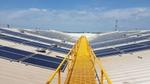
We continue to prioritize the use of reliable, renewable, and efficient energy across our sites in the U.S. In 2024, Unilever continued to source 100% renewable electricity for our operations – inclusive of our corporate offices, factories, and distribution centers.
![Solar panel farm and wind turbines next to water.]](/content-images/92ui5egz/production/9d63189795239ce76d00d603a6eae557efa62f8a-1920x1080.jpg?rect=0,3,1920,1075&w=150&h=84&fit=crop&auto=format)